Chores for kids: how they help build lasting habits
July 6, 2026
When we think about chores for kids, it's easy to picture only the practical side: an extra hand in the household rush. But the real value is somewhere else — in what the child learns about themselves by taking part.
A chore isn't about the dishes. It's about the child.
By taking care of something at home, the child discovers that:
- •they are capable ("I did it myself")
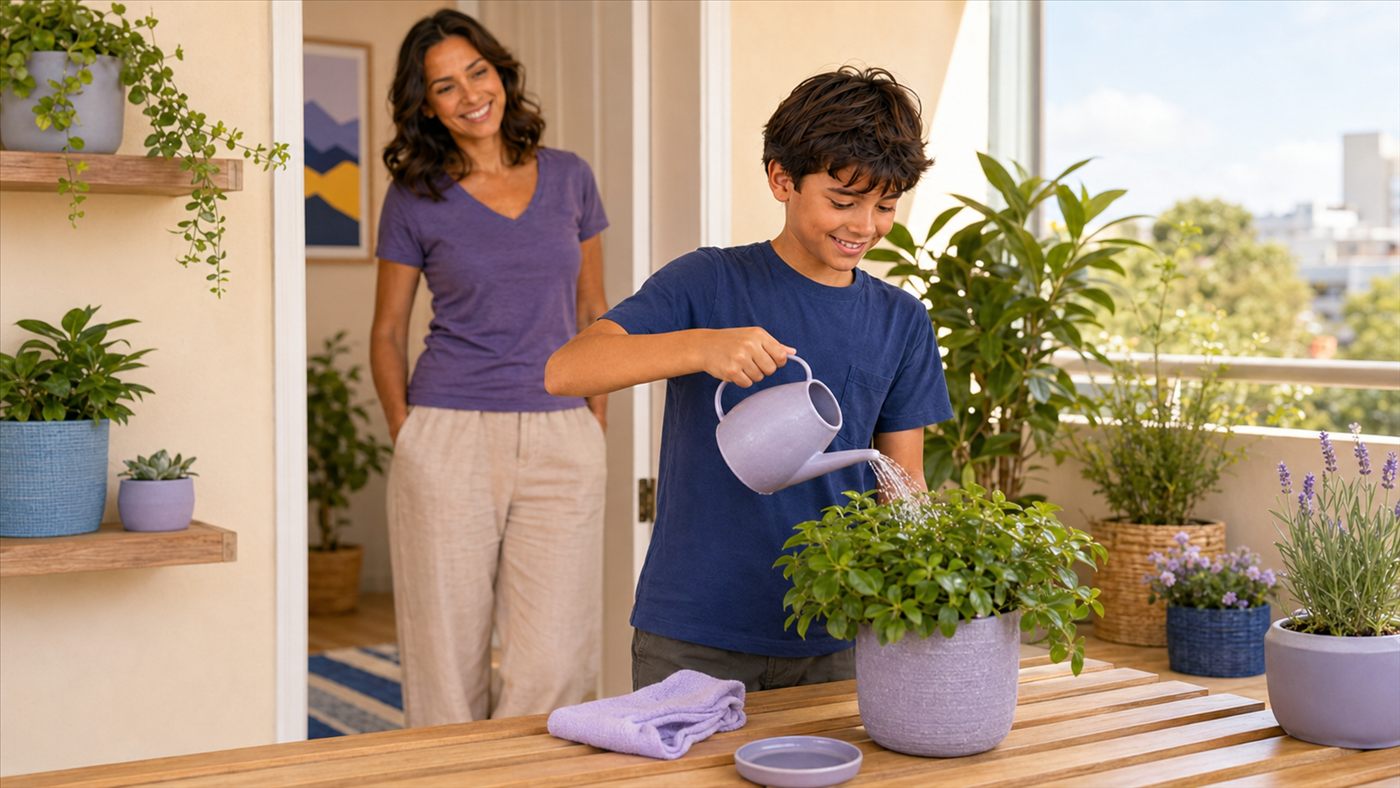
- •their actions have an effect ("if I don't water it, the plant wilts")
- •the home belongs to everyone ("here, we all pitch in")
These discoveries build autonomy, a sense of responsibility, and cooperation — things no lesson teaches as well as experience does.
Small responsibilities today become big abilities tomorrow.
What research tends to show
Many studies in education and child development link kids' participation in everyday tasks to the growth of initiative, self-esteem, and social skills. It's not about overloading the child — it's about offering small, age-appropriate responsibilities, consistently.
How to turn a chore into a habit
A habit is born from meaningful repetition. Three ingredients help:
- 1.Consistency — the same task, at roughly the same time of day.
- 2.Clarity — the child knows exactly what to do (short, visible steps).
- 3.Recognition — someone notices and values the effort.
When these three come together, the chore no longer needs nagging and becomes part of who the child is.
Where Tick Kids comes in
Tick Kids was designed precisely to support these three ingredients: you set the tasks (consistency and clarity), the child checks off what they completed (autonomy) and earns stars right away (recognition). The goal isn't "getting through the list" — it's building habits that last a lifetime.
And the best part: it starts small. One or two tasks are enough to plant the seed.
Start building habits today — your child's future begins with the small responsibilities of now. 💜