Functional adults start in childhood
July 19, 2026
Every parent dreams of the same future: a child who can manage on their own, who owns what's theirs, who knows how to get organized and doesn't fall apart at the first problem. A functional adult.
What almost nobody tells you is that this adult isn't born ready at 18. They are built long before that — in the small responsibilities of everyday life, when the child doesn't even realize they're learning something so important.
Autonomy doesn't appear all at once. It's built in childhood, one small habit at a time.
What a "functional adult" really means
It's not about being perfect or never making mistakes. It's about being able to run your own life:
- •taking care of your own things (organization)
- •owning what's your responsibility (commitment)
- •handling frustration without falling apart (resilience)
- •cooperating with the people around you (living together)
Notice that none of this is learned in a classroom. It's learned by doing — and childhood is the best time to start, because that's when the brain absorbs habits most easily.
How a small task becomes a big skill
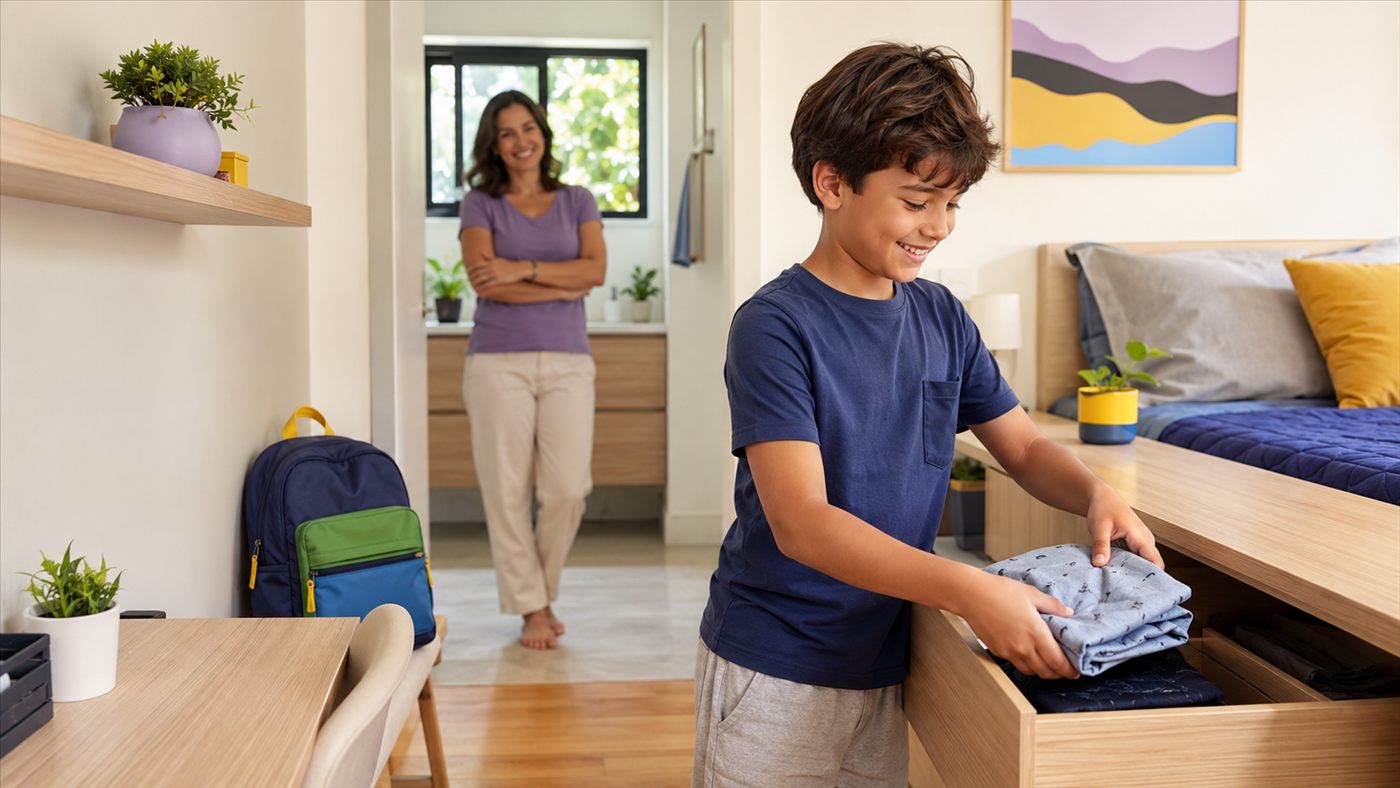
When a child makes their own bed, they're not just making a bed. Without realizing it, they're discovering that:
- •they are capable of doing it alone ("I did it!")
- •their actions have consequences ("if I don't tidy up, it stays messy")
- •they are part of a home that belongs to everyone ("here, we cooperate")
That's why taking part in household chores goes far beyond "helping mom." Several studies in education link children's participation in everyday tasks with the development of initiative, self-esteem, and a sense of responsibility. The task is small; what it teaches is huge.
It's not about overloading — it's about trusting
Giving responsibility doesn't mean turning your child into the family's maid. It means trusting them with small, age-appropriate tasks, and letting them feel the joy of pulling it off.
A 4-year-old who puts away their own shoes. An 8-year-old who packs their backpack. An 11-year-old who helps prepare a snack. Each at their own level — and always with an adult nearby, valuing the effort.
Small habits. Big futures.
Where to start today
You don't have to change everything at once. In fact, the secret is the opposite: start small.
- 1.Pick 1 or 2 tasks that are simple and doable for their age
- 2.Make them visible — a child follows what they can see far better than ten reminders
- 3.Celebrate every win — recognition is what makes the habit stick
- 4.Repeat every day — it's consistency, not perfection, that builds the habit
Recognition is the fuel
Our instinct is to point out what's missing ("you forgot again?"). But what really builds the habit is the opposite: noticing and valuing what the child did. A "well done, you did it yourself!" is worth more than any scolding.
That's exactly why we created Tick Kids: you set the tasks, the child checks off what they've done and earns stars right away. Recognition is immediate and visual — and the child wants to do it again, not out of obligation, but because they feel capable.
Because, in the end, that's what it's all about: your child's future begins with today's small responsibilities.
Start building these habits now — it only takes a few minutes. 💜